THE HEALTHY FOREST ALLIANCE IS DEDICATED TO PROTECTING PEOPLE, PROPERTY, AND ECOSYSTEMS BY ADVANCING THE SAFE AND STRATEGIC USE OF PRESCRIBED FIRE, SUPPORTING DEFENSIBLE SPACE AROUND HOMES, AND BUILDING WILDFIRE-ADAPTED COMMUNITIES THROUGH EDUCATION AND COLLABORATION.
DEFENSIBLE SPACE & HOME HARDENING
PRESCRIBED FIRE & FUELS REDUCTION
We promote the safe use of prescribed fire to reduce hazardous fuels, restore healthy ecosystems, and lower wildfire intensity. By supporting training, collaboration, and community burns, we help normalize prescribed fire as a vital, science-based tool for proactive wildfire prevention and landscape resilience.
DEFENSIBLE SPACE FOR PROPERTY OWNERS
We empower homeowners to create and maintain defensible space through education, tools, and hands-on support. Proper vegetation management and home hardening reduce ignition risk, improve firefighter access, and increase safety for families and neighborhoods in fire-prone areas.
COMMUNITY WILDFIRE EDUCATION & COLLABORATION
We engage communities through education, outreach, and partnerships that foster fire awareness and collective responsibility. By supporting local action and fire-adapted planning, we help residents prepare for wildfire and build resilience together.
Press Release:
HELP US IMPLEMENT “GOOD FIRE" IN OUR COMMUNITIES.
DEFENSIBLE SPACE CLEARANCE SAVES HOMES
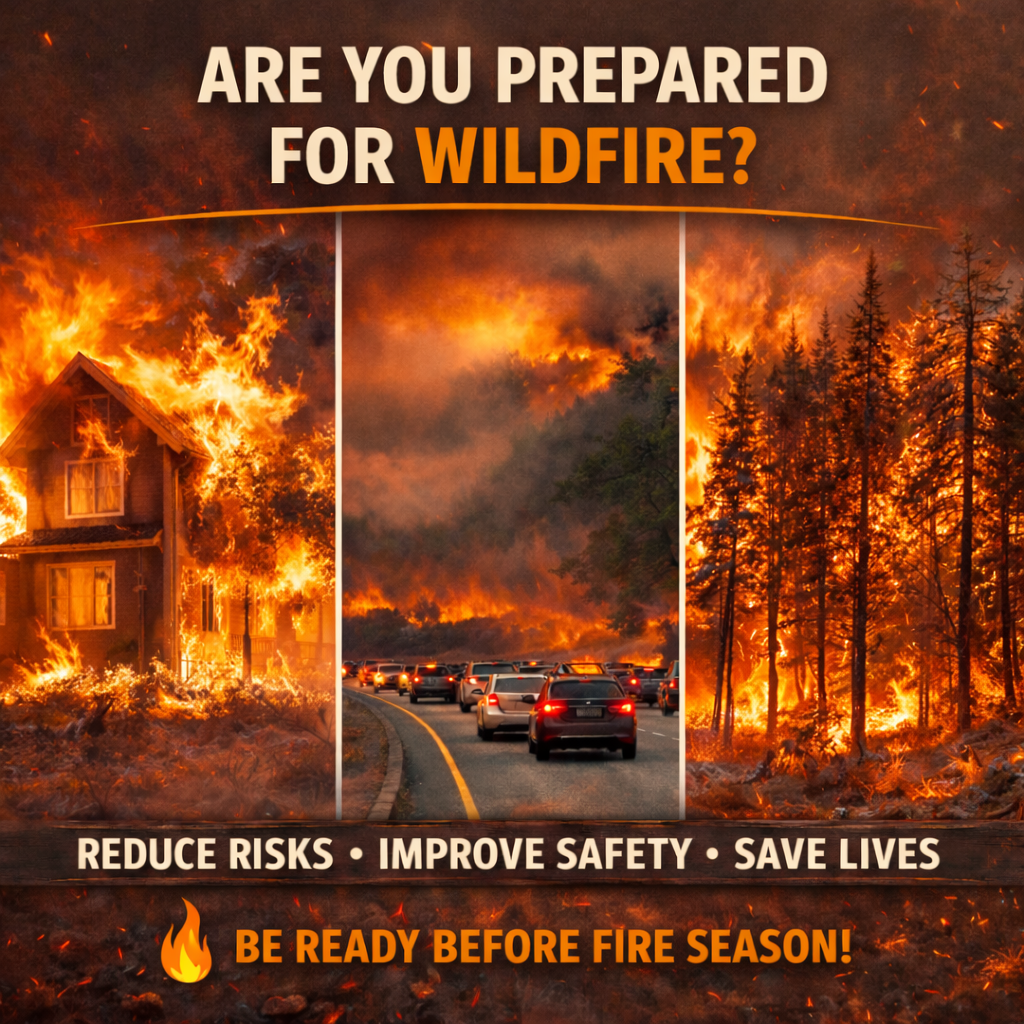
Are you ready for wildfire? Preparation means creating defensible space, hardening your home, planning evacuations, and staying informed. Fire season is no longer predictable. Taking action now protects lives, homes, and firefighters, and gives your community a stronger chance to withstand wildfire when it comes.
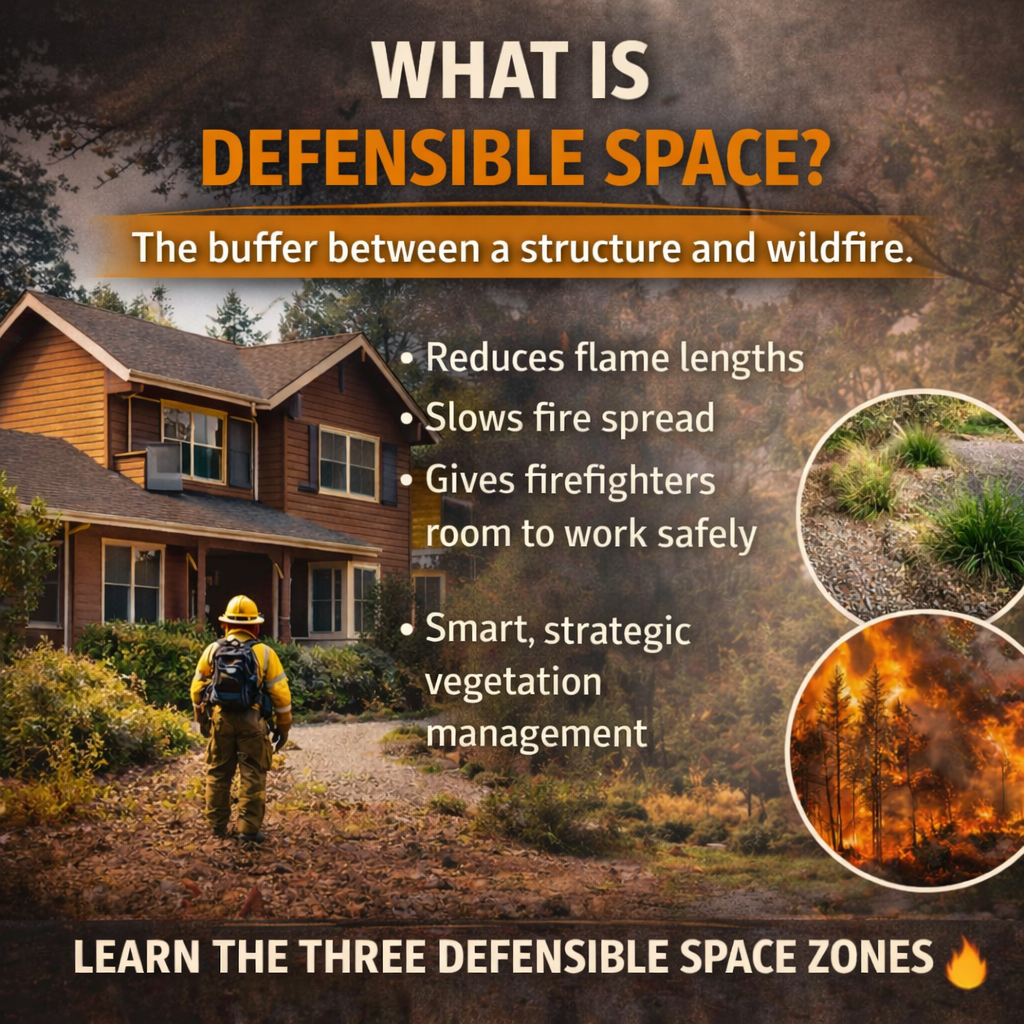
Defensible space is the managed area around a home where vegetation and fuels are reduced and maintained. It slows wildfire spread, reduces ember ignition, improves firefighter access and safety, and significantly increases the likelihood that structures survive during wildfire events while supporting long-term community resilience.
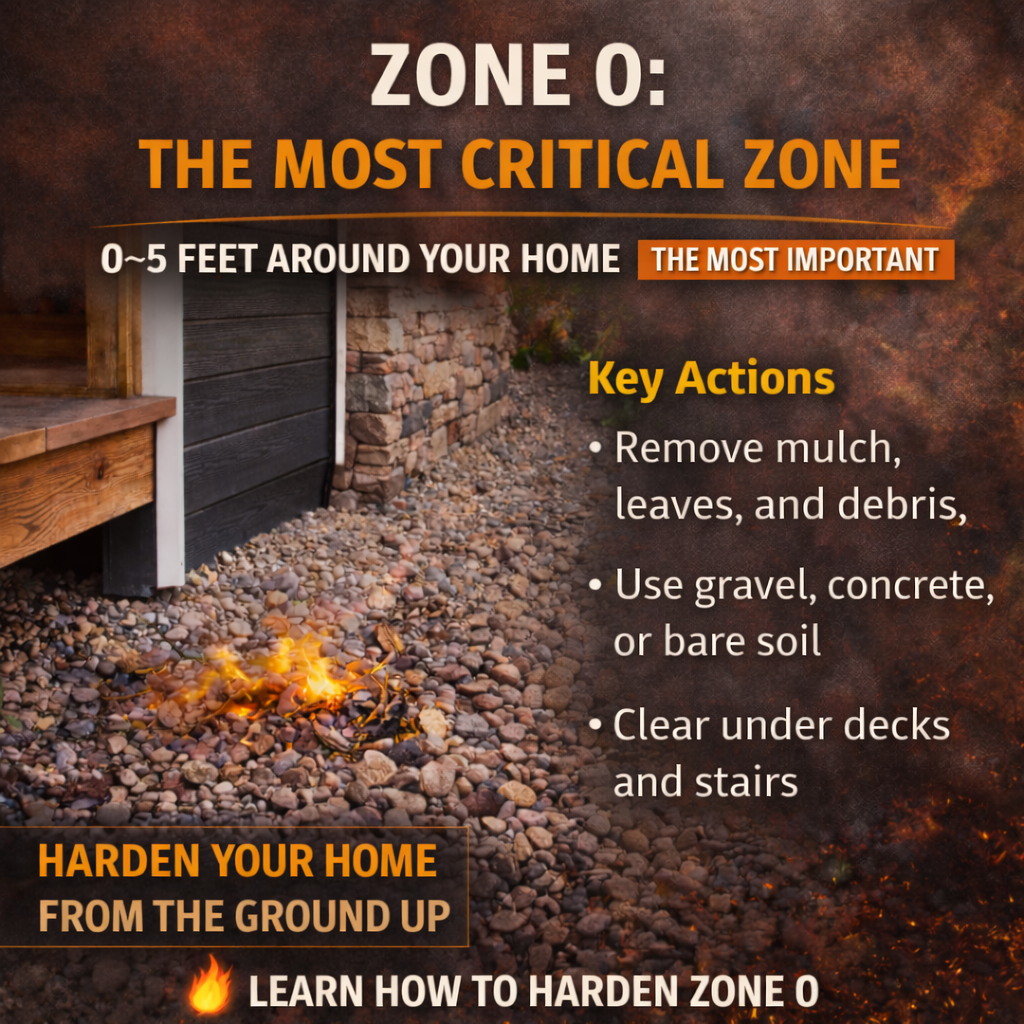
Zone Zero is the first five feet around a home and the most critical area for wildfire protection. Keeping it free of combustible materials reduces ember ignition, prevents direct flame contact, improves firefighter safety, and greatly increases the chance a structure survives during wildfire events.
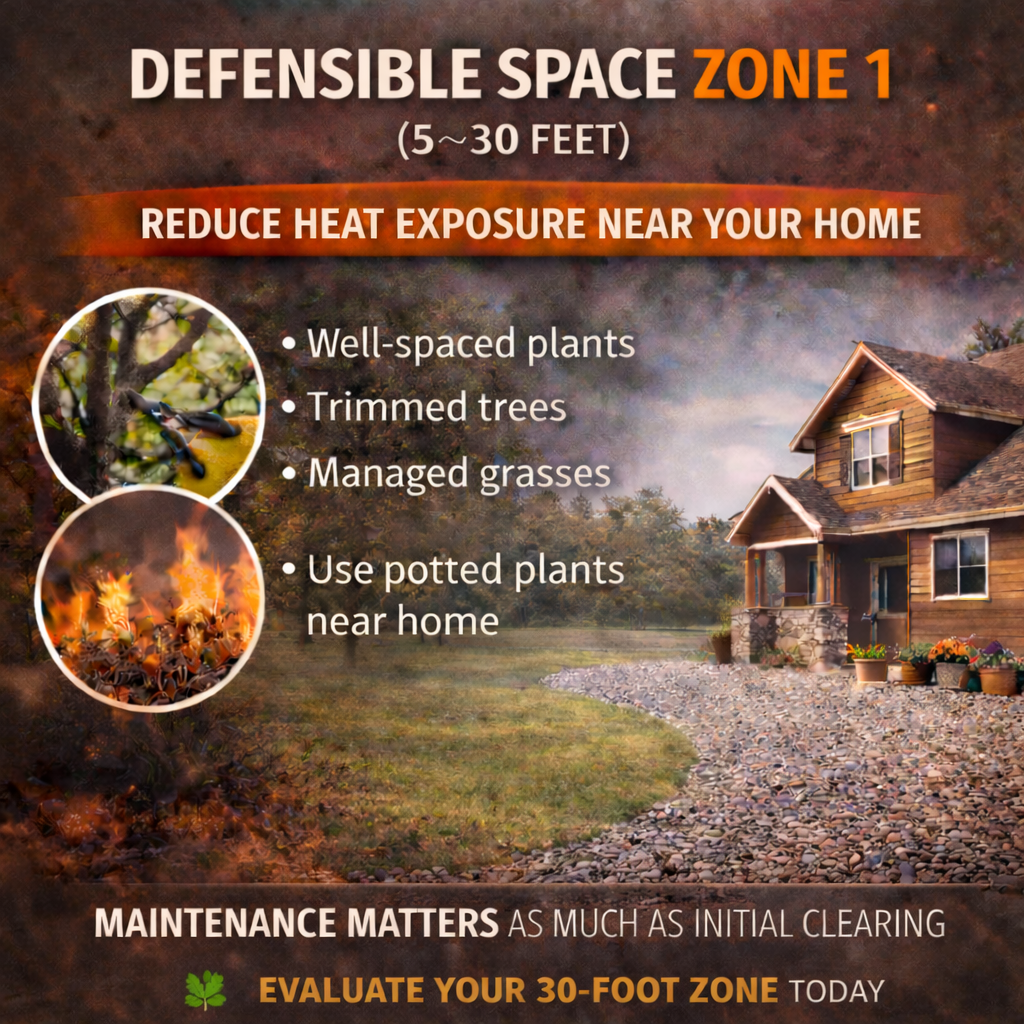
Zone 1 extends from five to thirty feet around a structure and focuses on reducing fire intensity. Proper spacing, pruning, and vegetation management limit flame spread, reduce radiant heat, slow wildfire progression, and create safer conditions for firefighters defending homes during wildfire events.
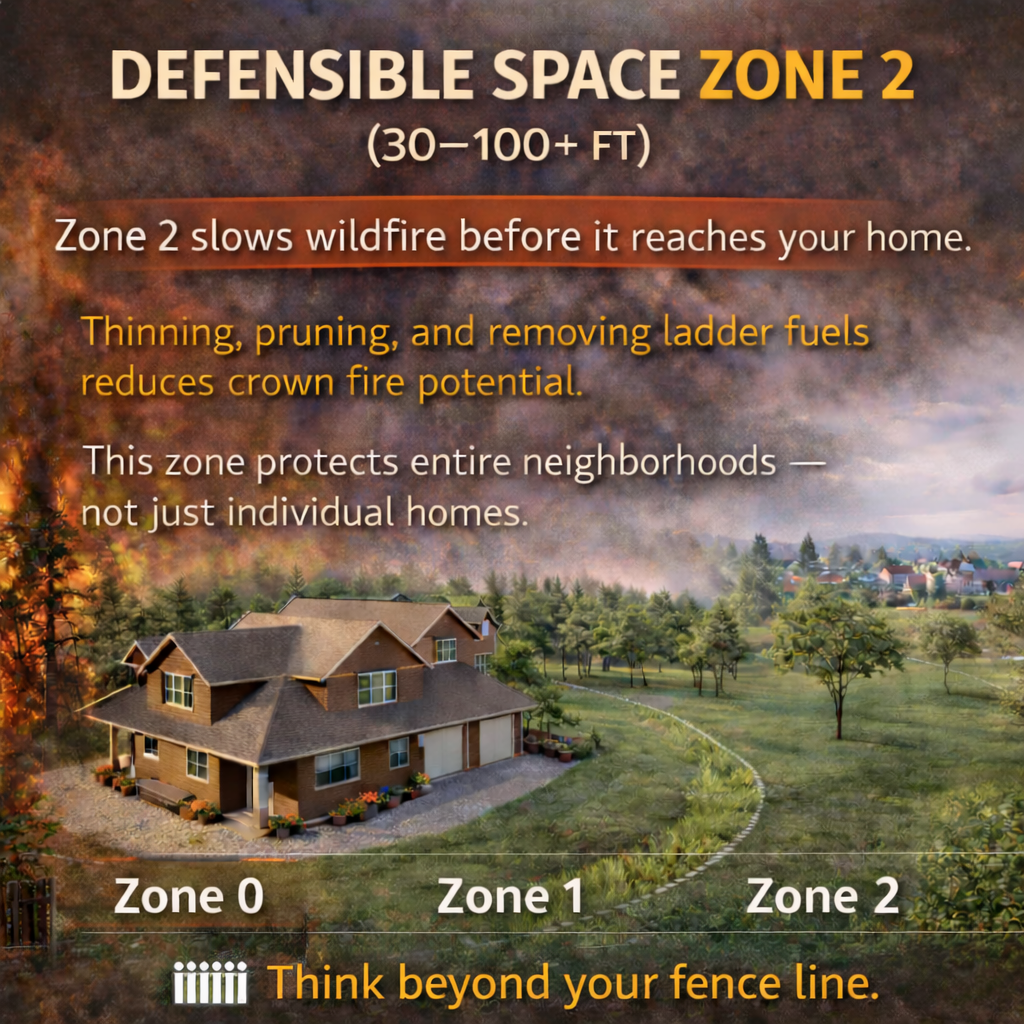
Zone 2 extends from thirty to one hundred feet around a home and focuses on reducing wildfire intensity. Thinning trees, removing ladder fuels, and spacing vegetation slows fire spread, reduces flame lengths, and limits ember production. This zone creates safer conditions for firefighters, improves access and visibility, and significantly increases the likelihood homes and surrounding communities survive wildfire events.
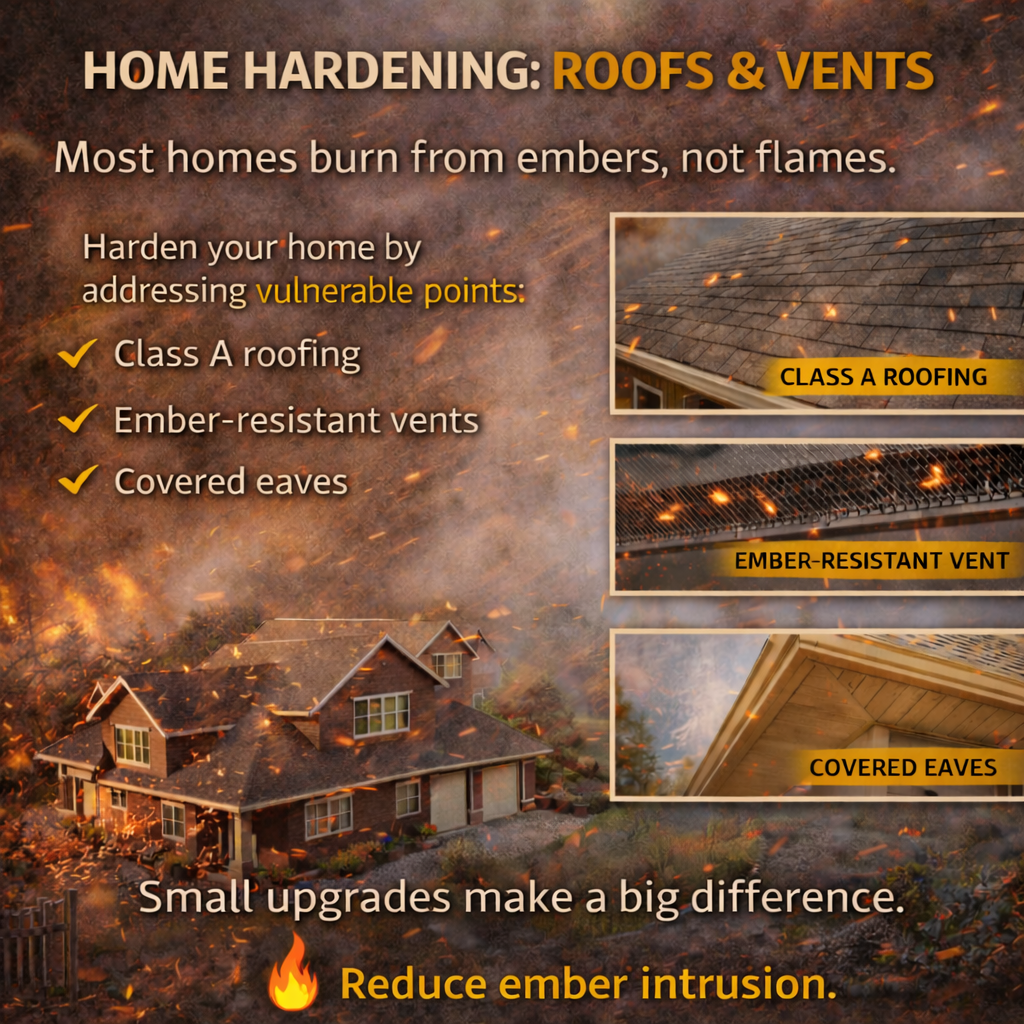
Home hardening starts with roofs and vents, the most vulnerable ignition points. Use Class A roofing, seal gaps, and install ember resistant vents. These upgrades block wind driven embers, reduce radiant heat exposure, and prevent interior ignition. Strengthening roofs and vents dramatically improves home survival, firefighter safety, and community resilience during wildfire events while lowering losses and recovery costs statewide.
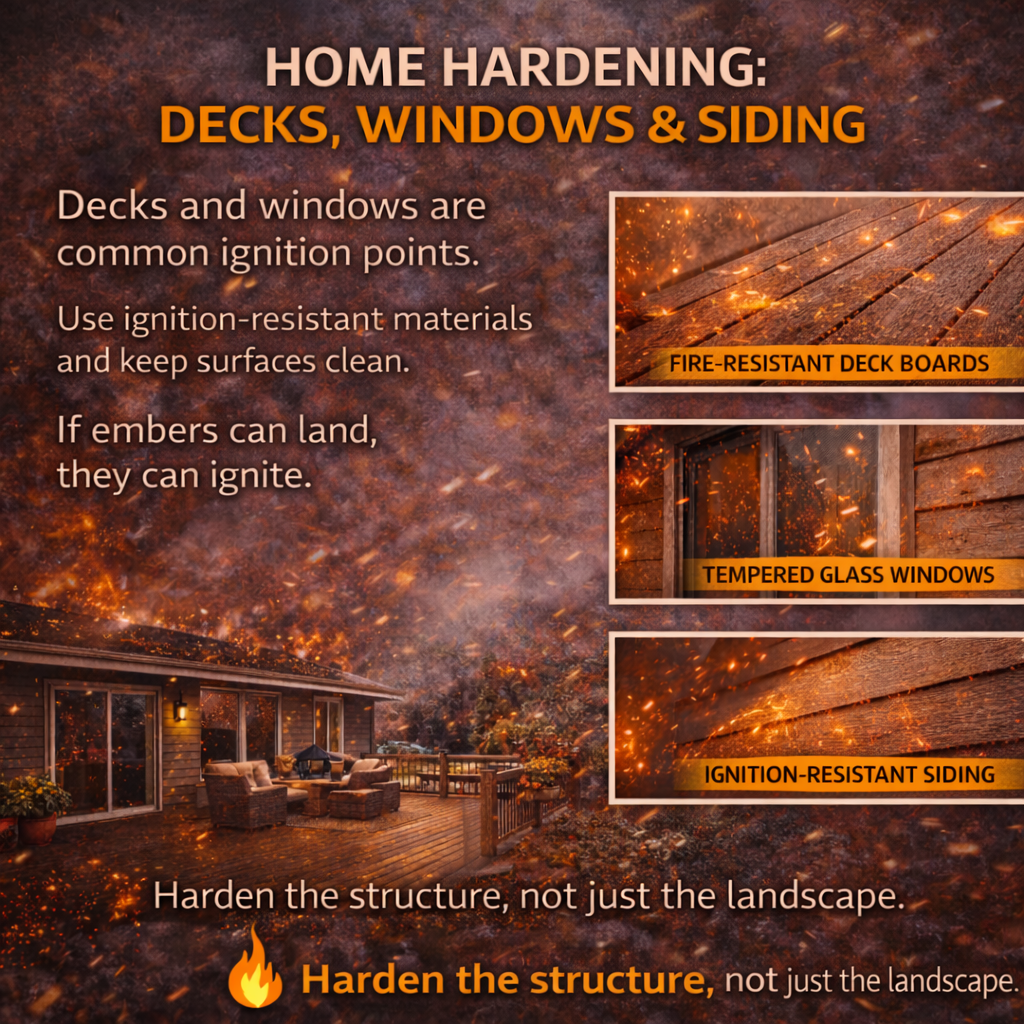
Home hardening includes decks, windows, and siding, which are highly vulnerable to embers and radiant heat. Use noncombustible or ignition resistant materials, enclose deck undersides, install tempered glass windows, and maintain clearances. These upgrades reduce ember intrusion, prevent flame attachment, and significantly improve structure survivability, firefighter safety, and overall wildfire resilience for homes and neighborhoods during wildfire events.
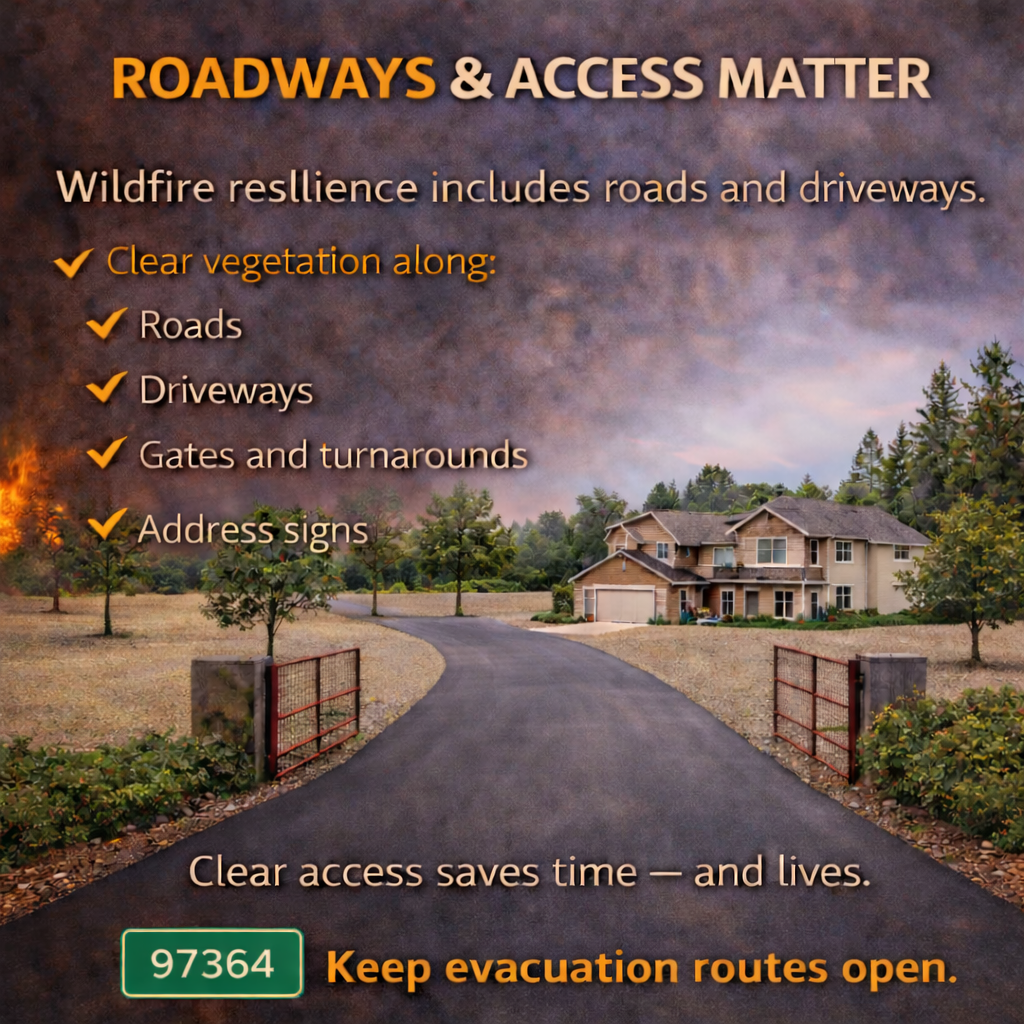
Roadways and access are critical during a wildfire. Clear, well-maintained roads support safe evacuations, allow fire engines to reach homes, and give firefighters room to operate. Adequate turnarounds, visible addresses, and vegetation clearance reduce delays and hazards. Good access improves firefighter safety, increases structure defense success, and helps communities evacuate quickly and safely during rapidly changing wildfire conditions.
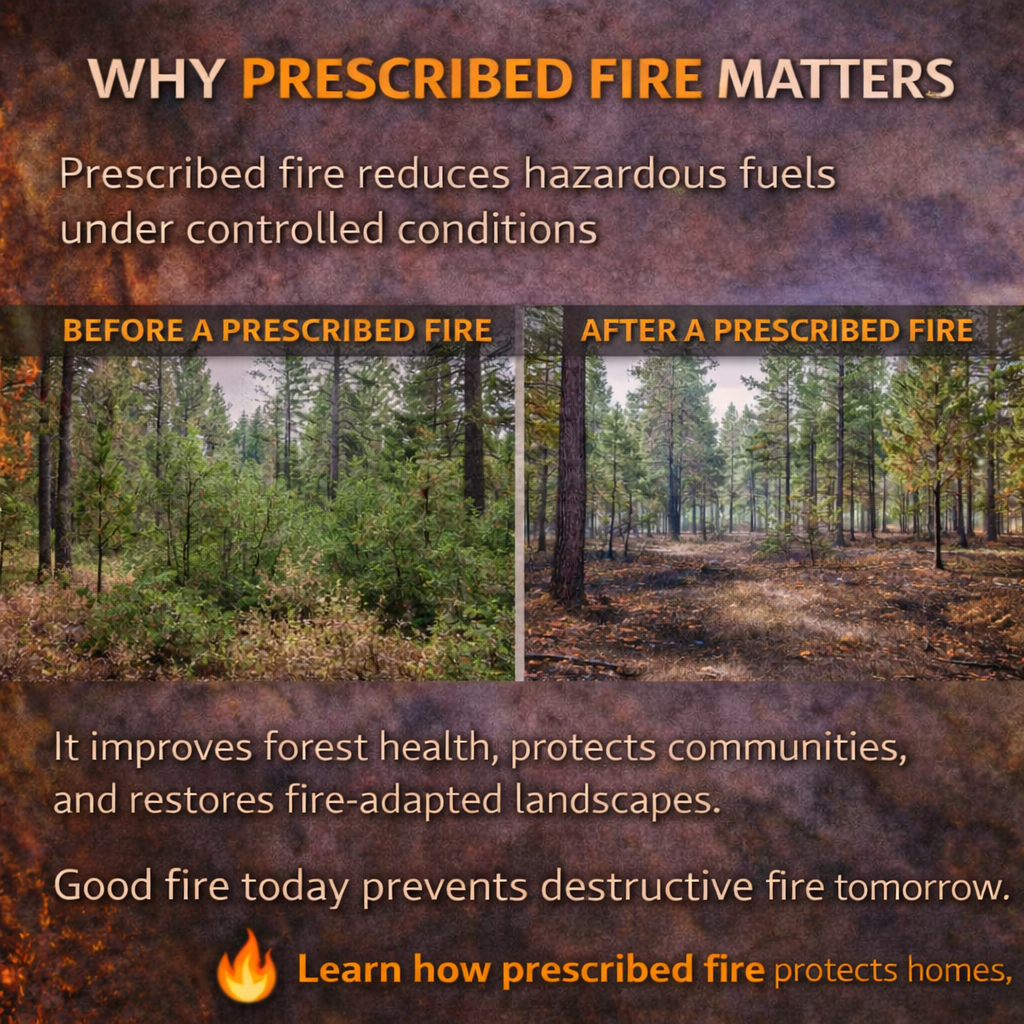
Prescribed fire is an effective tool for improving defensible space. Carefully planned, low-intensity burns reduce accumulated fuels, limit ladder fuels, and maintain vegetation at safer levels. When combined with mechanical treatments, prescribed fire lowers wildfire intensity, reduces ember production, and creates more resilient landscapes around homes. This proactive approach supports firefighter safety, protects communities, and strengthens long-term wildfire preparedness.
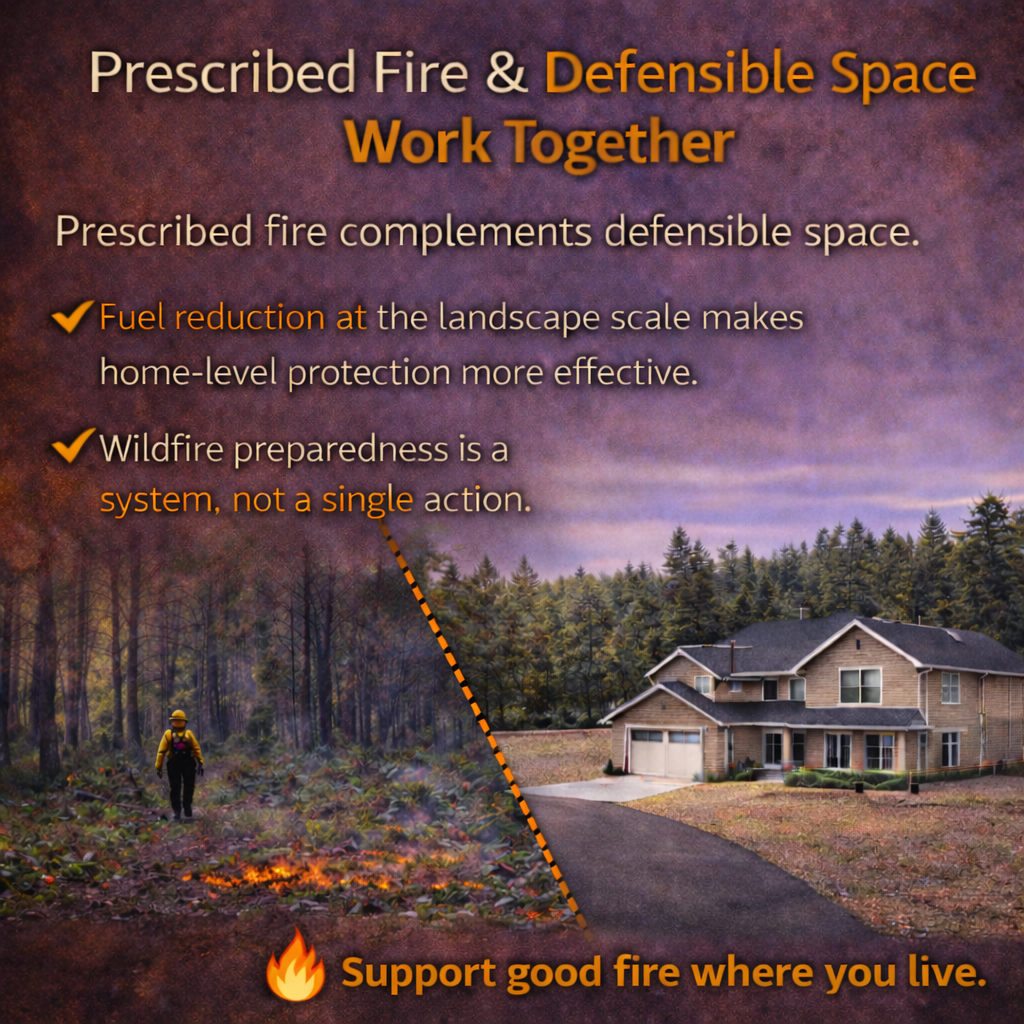
Prescribed fire and defensible space work together to reduce wildfire risk at multiple scales. Defensible space protects individual homes, while prescribed fire reduces fuels across the surrounding landscape. Combined, they lower fire intensity, limit ember production, and slow fire spread. This integrated approach improves firefighter safety, increases structure survivability, and builds more resilient communities before wildfire occurs.
Community-scale risk reduction focuses on reducing wildfire hazards across entire neighborhoods and landscapes. Coordinated defensible space, home hardening, prescribed fire, and fuel treatments work together to lower fire intensity and spread. Shared planning, evacuation routes, and maintained access improve safety for residents and firefighters. When communities act collectively, wildfire risk decreases, response effectiveness improves, and long-term resilience is strengthened for everyone.
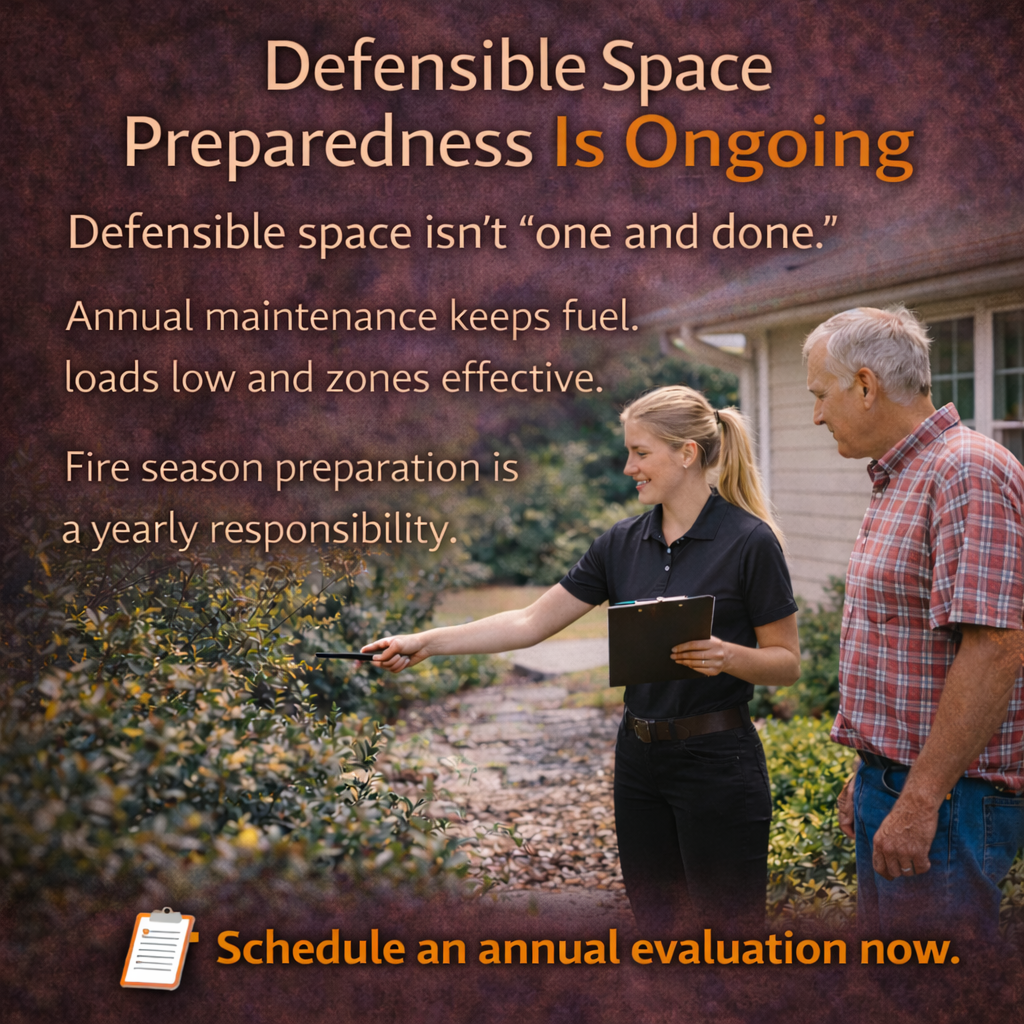
Defensible space preparedness is an ongoing process, not a one-time task. Vegetation regrows, debris accumulates, and conditions change each season. Regular inspections, maintenance, and updates keep fuel loads low and access clear. Continuous attention ensures defensible space remains effective, supports firefighter safety, and improves home survival as wildfire risks evolve year after year.
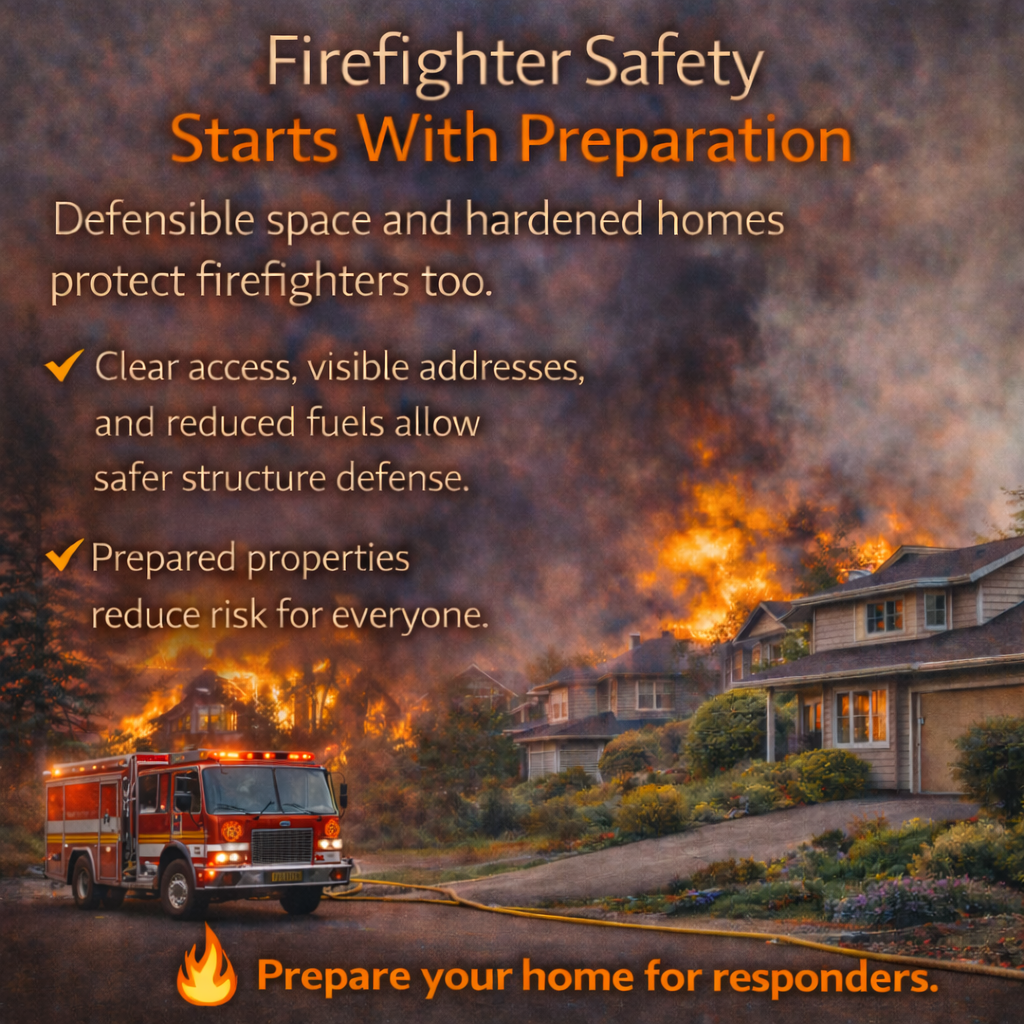
Defensible space is critical for firefighter safety during wildfire response. Reduced fuels, clear access, and proper vegetation spacing lower flame lengths and heat exposure. Well-maintained defensible space provides safer working areas, improves engine access and turnarounds, and allows firefighters to defend structures more effectively while reducing the risk of entrapment and injury.
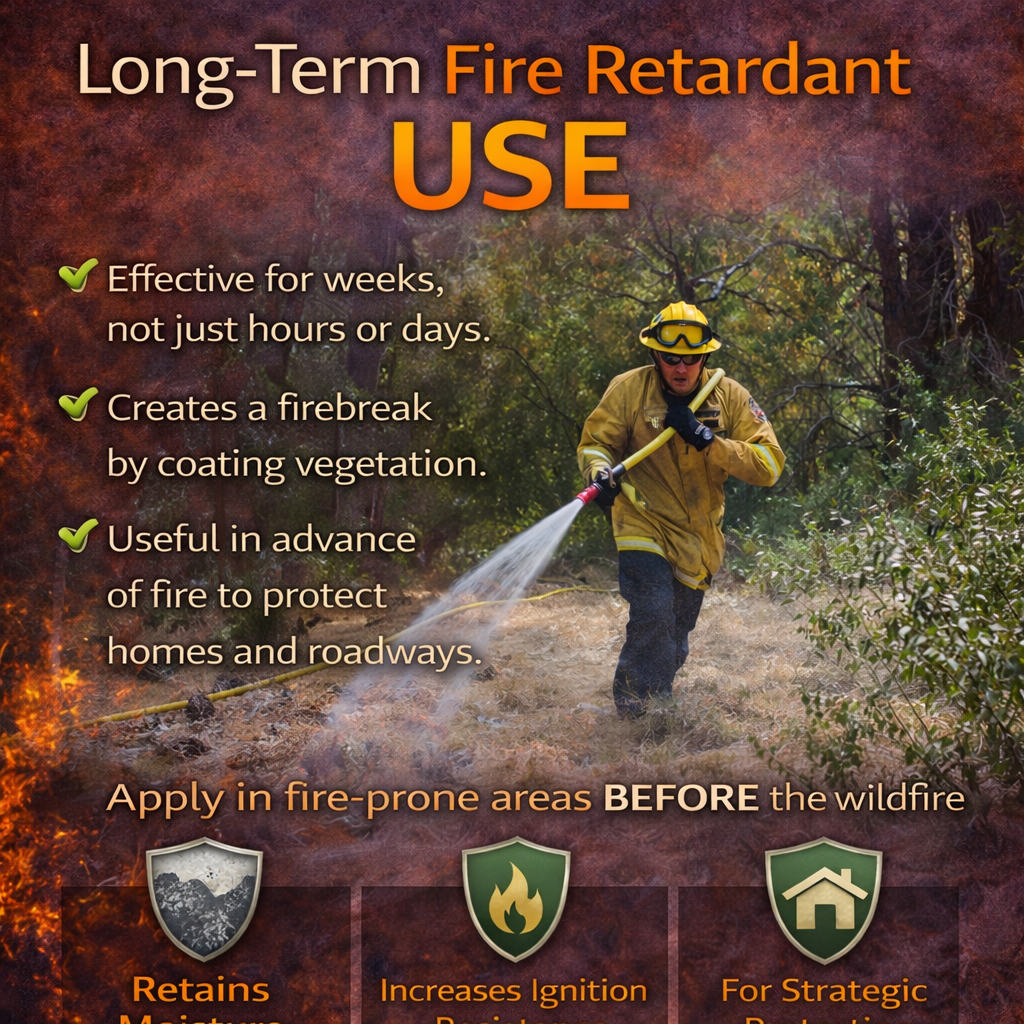
Long-term fire retardant use can support defensible space when applied correctly. Retardants and gels reduce the flammability of vegetation and structures, helping slow ignition from embers and flames. They are most effective when combined with vegetation management and home hardening. Retardants are not a substitute for clearance, but a supplemental tool to reduce risk and support firefighter safety.
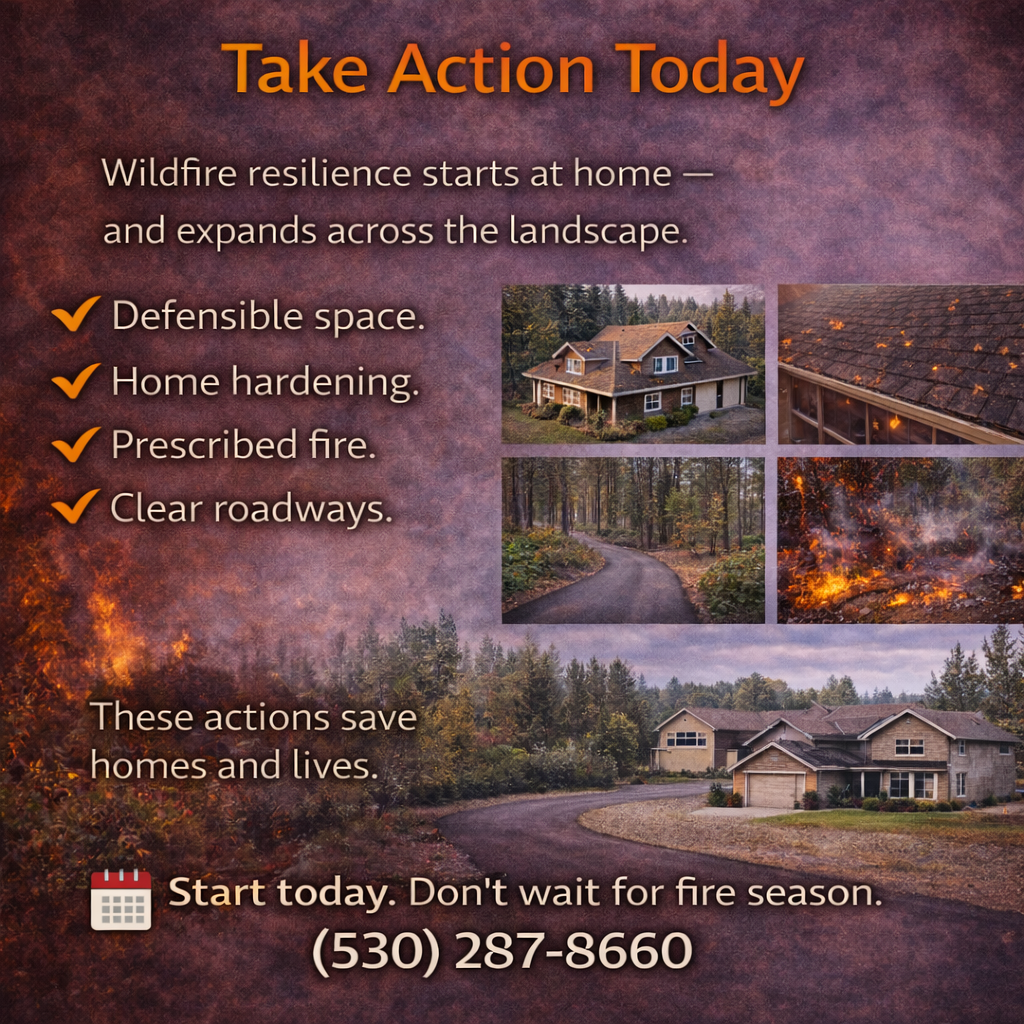
We help communities prepare for wildfire through education, assessments, and action. Our team supports defensible space, home hardening, prescribed fire, and community planning. We provide training, resources, and guidance to reduce risk, improve firefighter safety, and build long-term resilience for homeowners, land managers, and neighborhoods working together before fire season and beyond.
LEARN MORE ABOUT PRESCRIBED FIRE AND HOW IT CAN BE USED TO PROMOTE HEALTHY FORESTS
FROM OUR BLOG
🔥 Small Teams, Big Impact: The Rise of Micro Prescribed Burn Associations Across California,...
“So You’ve Masticated Your Land for Fire Safety… Now What?” Across California, thousands of...
🔥 The Do’s and Don’ts of Pile Burning for Property Owners in California When used correctly, pile...
HELPING LANDOWNERS PROMOTE HEALTHY FORESTS USING "GOOD FIRE"
how you can help
MAKE A DONATION
BECOME A MEMBER
SPREAD THE WORD!
Please Support Our Corporate Members